Bagdogra Airport’s New Terminal Targets Net-Zero Emissions
AVIATION & AIRPORTS

Bagdogra Airport’s New Terminal Targets Net-Zero Emissions

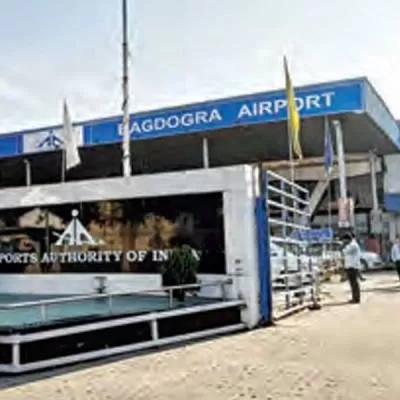
A major transformation is underway at Bagdogra Airport as construction begins on a new terminal, poised to become one of India’s most climate-conscious aviation hubs. The upcoming civil enclave, covering 1.2 million square feet, aims to accommodate 1,000 passengers per hour and is scheduled for completion by March 2027.
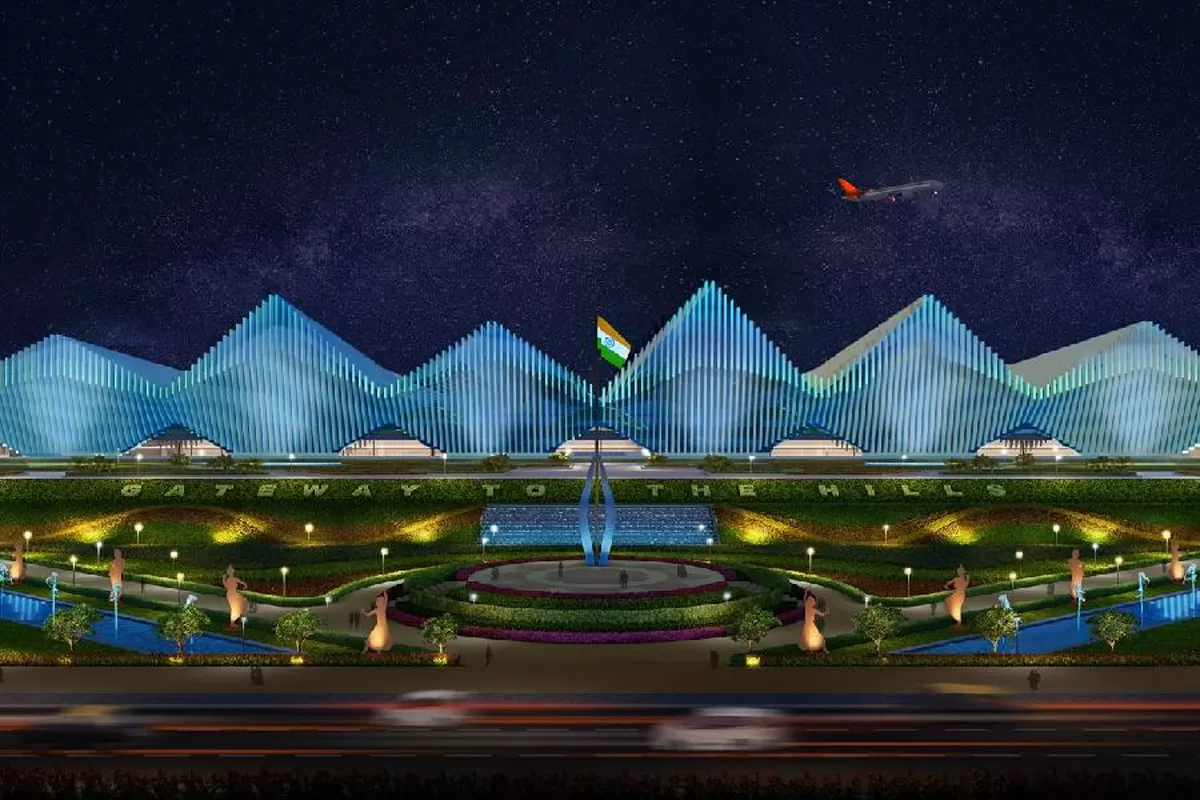
The project combines modern performance with strong cultural and environmental sensitivity. Designed by CP Kukreja Architects, the terminal takes architectural cues from the surrounding Himalayan terrain, with vertical aluminium fins and pitched roofs symbolising Darjeeling’s tea gardens and the jagged peaks of Kangchenjunga.
Given the site’s flood-prone nature, climate resilience is central to the design. A comprehensive stormwater management system featuring culverts, retaining walls and integrated drainage is planned to address environmental challenges.
Inside, the terminal promises a welcoming, intuitive layout. Large column-free halls will offer openness and better visibility, while natural materials will reflect the region’s identity and enhance the passenger experience. The design also prioritises efficiency across check-in, security and boarding.
The terminal is being developed as a net-zero carbon facility, with passive cooling strategies, low-emissivity glass and on-site renewable energy generation to reduce its environmental impact.
Bagdogra’s strategic location—serving north Bengal and the Northeast—positions the new terminal as both a regional gateway and a national example of climate-sensitive infrastructure. Once complete, it is expected to stand as a landmark of sustainable aviation development. 

A major transformation is underway at Bagdogra Airport as construction begins on a new terminal, poised to become one of India’s most climate-conscious aviation hubs. The upcoming civil enclave, covering 1.2 million square feet, aims to accommodate 1,000 passengers per hour and is scheduled for completion by March 2027.The project combines modern performance with strong cultural and environmental sensitivity. Designed by CP Kukreja Architects, the terminal takes architectural cues from the surrounding Himalayan terrain, with vertical aluminium fins and pitched roofs symbolising Darjeeling’s tea gardens and the jagged peaks of Kangchenjunga.Given the site’s flood-prone nature, climate resilience is central to the design. A comprehensive stormwater management system featuring culverts, retaining walls and integrated drainage is planned to address environmental challenges.Inside, the terminal promises a welcoming, intuitive layout. Large column-free halls will offer openness and better visibility, while natural materials will reflect the region’s identity and enhance the passenger experience. The design also prioritises efficiency across check-in, security and boarding.The terminal is being developed as a net-zero carbon facility, with passive cooling strategies, low-emissivity glass and on-site renewable energy generation to reduce its environmental impact.Bagdogra’s strategic location—serving north Bengal and the Northeast—positions the new terminal as both a regional gateway and a national example of climate-sensitive infrastructure. Once complete, it is expected to stand as a landmark of sustainable aviation development. 

Next Story
Infrastructure Transport

MMRDA advances 250 m on Orange Gate–Marine Drive tunnel

The Mumbai Metropolitan Region Development Authority (MMRDA) has completed 250 m of underground tunnelling for the Orange Gate–Marine Drive Urban Road Tunnel using India’s largest slurry shield tunnel boring machine (TBM) deployed for an urban road project.The project involves twin tunnels extending over 7 km beneath critical transport corridors, including Central Railway, Western Railway and Metro Line 3. The work requires high-precision engineering to navigate densely developed urban infrastructure.Once completed, the tunnel is expected to reduce travel time between Orange Gate and Marin..

Next Story
Infrastructure Urban

Hindustan Zinc Pays Rs 188.46 Billion in FY26

Hindustan Zinc contributed Rs 188.46 billion to the public exchequer in FY 2025-26, according to its 9th Tax Transparency Report. The contribution, equivalent to 46 per cent of the company’s revenue, included direct and indirect taxes, government royalties, dividends to the Government of India, withholding taxes and other statutory levies.The company’s five-year cumulative contribution to the exchequer stood at Rs 915.72 billion. In FY26, Hindustan Zinc reported revenue of Rs 408.44 billion, EBITDA of Rs 221.62 billion and profit after tax of Rs 138.32 billion. It also achieved its highest..

Next Story
Infrastructure Urban

World of Concrete India 2026 Opens in Mumbai

Informa Markets in India will host the 12th edition of World of Concrete India 2026 from 3–5 June 2026 at the Bombay Exhibition Centre, Mumbai. The specialised B2B exhibition will bring together manufacturers, suppliers, contractors, developers, architects, consultants, infrastructure companies, project leaders and government stakeholders.The event is expected to feature over 350 brands and more than 18,000 trade professionals. It will cover concrete and cement, dry mortar, precast technologies, formwork, construction chemicals, industrial and commercial flooring, scaffolding, safety solutio..

Advertisement

Subscribe to Our Newsletter

Get daily newsletters around different themes from Construction world.

STAY CONNECTED

Advertisement

Advertisement

Advertisement